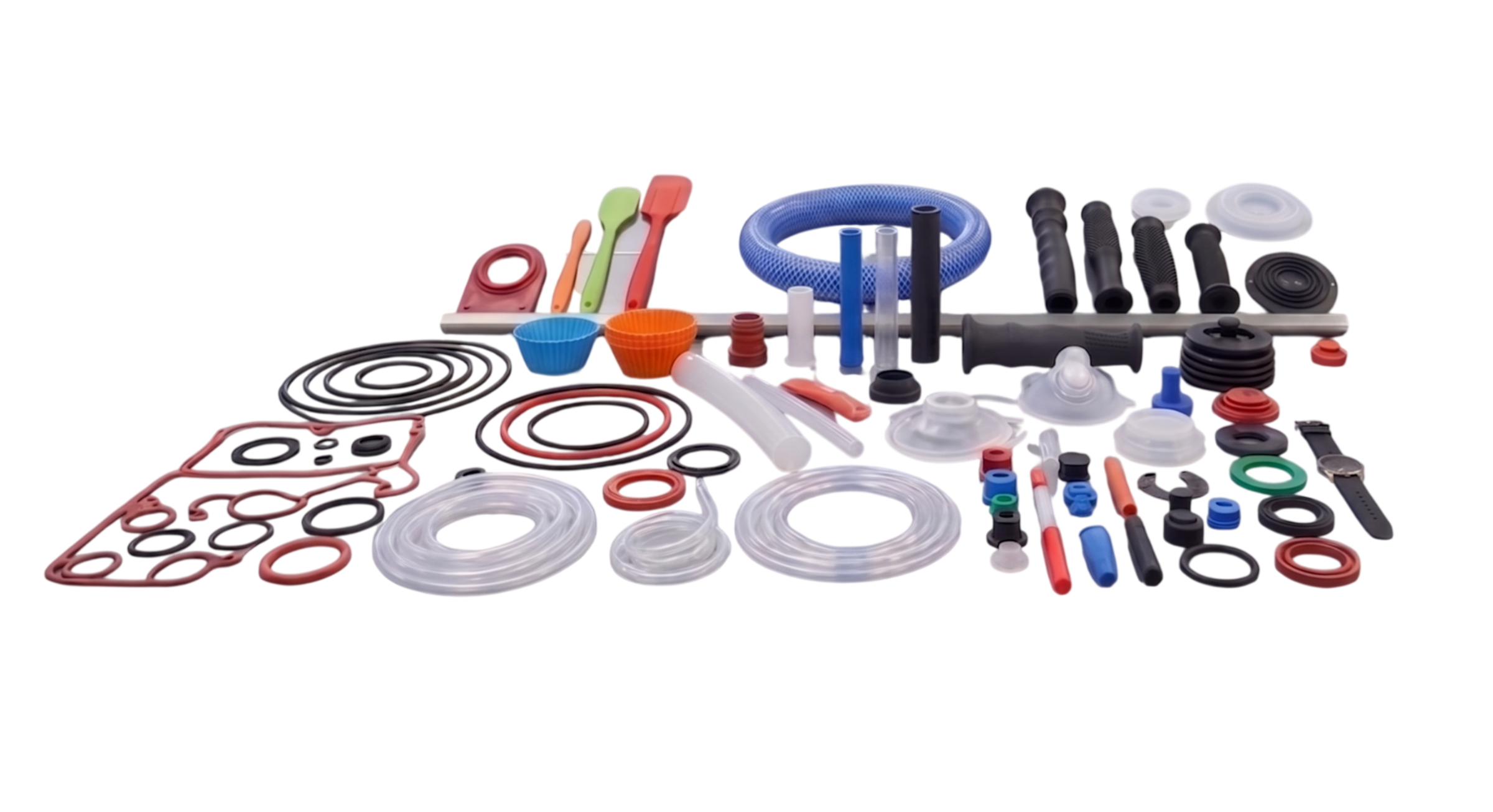
Silicone rubber (Chemical Designation: Polysiloxane) is a versatile elastomer primarily valued for its stability across extreme thermal environments.
Key Performance Benefits
- Extreme Temperature Resistance: Highly effective for applications requiring stability in both high and low temperature extremes.
- Low-Temperature Flexibility: General compounds remain flexible at -40°F, while specialized low-temperature compounds stay flexible down to -130°F.
- High-Temperature Durability: Capable of maintaining integrity at temperatures reaching up to 700°F for short durations.
- Broad Hardness Range: Available in a durometer range from 10 Shore A to 80 Shore A, allowing for everything from very soft to relatively hard components.
- Versatile Manufacturing: Can be processed through various methods including:
- Molding into specific parts.
- Extruding into tubing or profiles.
- Calendering into sheet goods.
Temperature vs. Service Life
The longevity of silicone rubber is directly impacted by its continuous operating temperature:
| Temperature |
Estimated Service Life |
| 300°F |
15,000 hours |
| 400°F |
7,500 hours |
| 500°F |
2,000 hours |
| 600°F |
100 hours |
| 700°F |
15 to 30 minutes |
Material Composition & Curing
- Uncured States: Available in either Liquid or Gum form.
- Curing Methods: Products are typically cured using Platinum or Peroxide methods, with Peroxide being the most common.
- Industry Applications: Widely used in the aerospace, automotive, appliance, and electrical/electronic sectors.
Limitations & Considerations
- Cost: Remains a limiting factor if extreme temperature resistance is not a primary requirement.
- Physical Strength: Unreinforced silicones generally have lower tensile strength compared to other elastomers. Silicone will not hold up against high pressure steam.
- Chemical Sensitivity: Generally susceptible to damage when exposed to many solvents, oils, concentrated acids, and dilute sodium hydroxide.