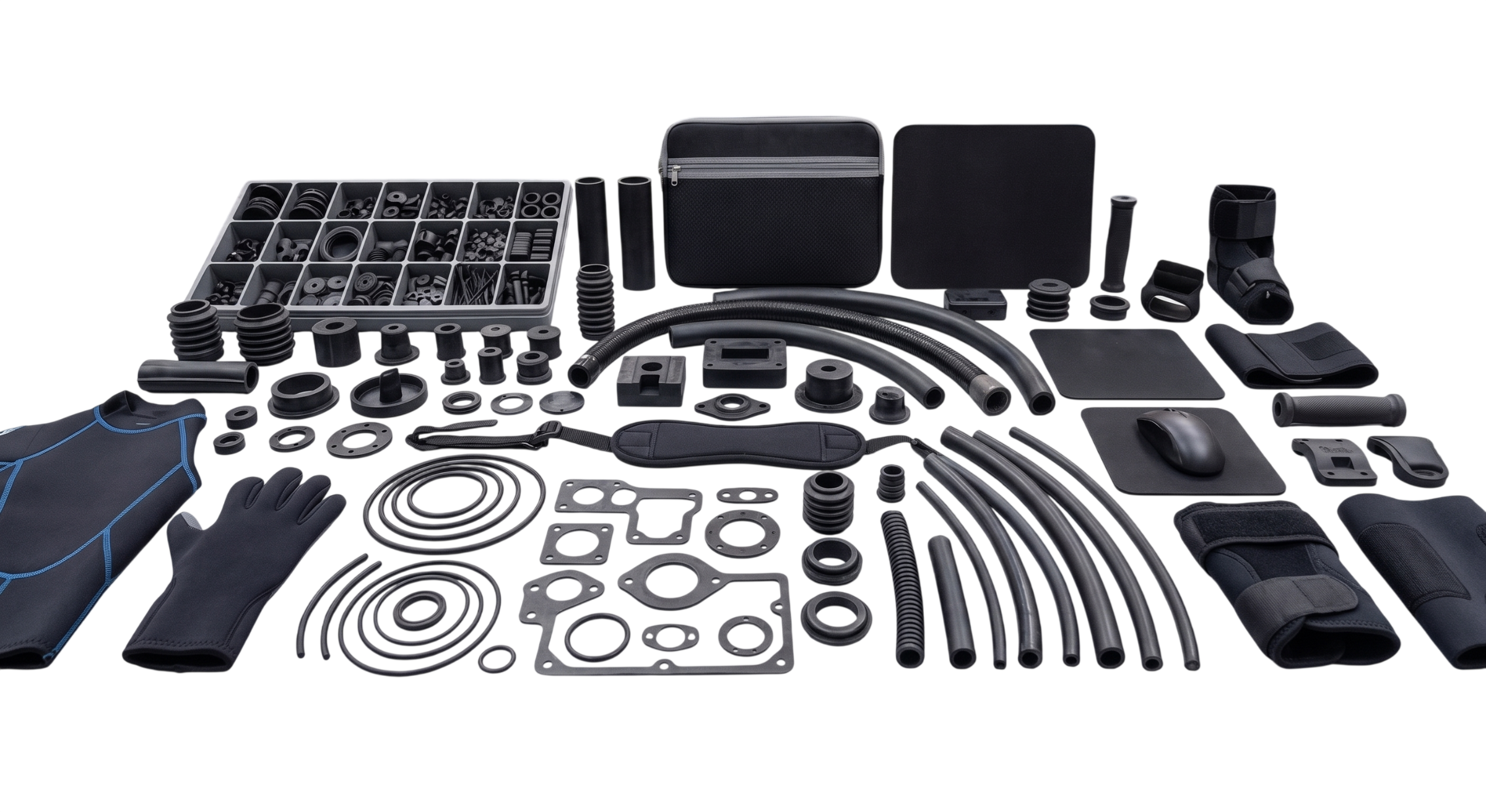
Neoprene is a versatile synthetic rubber that has been a staple in industrial applications since the 1930s. It transitions from a gum-like uncured state into durable solid or sponge forms through various manufacturing processes.
Major Advantages
- Environmental Resistance: Exceptional protection against ozone, sunlight, and oxidation.
- Chemical & Oil Resistance: Highly resistant to many petroleum derivatives, water, and various chemicals.
- Mechanical Properties: Features excellent resilience and high tensile strength.
- Temperature Range: Maintains integrity within operating temperatures of -30°F to 200°F.
- Versatility in Manufacturing: Can be molded into specific parts, extruded into profiles and tubing, or calendered into sheet goods.
- Material Variety: Available in both solid and sponge rubber densities.
Limitations
- Cost: Generally higher in price than standard general-purpose synthetic rubbers (though often justified by its performance).
- Chemical Vulnerabilities: Subject to degradation when exposed to:
- Strong oxidizing acids
- Esters and ketones
- Chlorinated, aromatic, and nitro hydrocarbons
Chemical Designation
- Common Name: Neoprene
- Technical Name: Chloroprene (CR)