EPDM Rubber (Ethylene Propylene):
Major Advantages
- Outdoor Durability: Ideal for outdoor use due to excellent resistance to ozone, oxidants, and severe weather conditions.
- Thermal and Electrical Properties: Features outstanding heat resistance and dielectric qualities, along with excellent color stability.
- Cost-Effectiveness: Offers many of the same advantages as neoprene but at a lower cost.
- Temperature Range:
- Sulfur Cured: Operates from -50°F to 220°F.
- Peroxide Cured: Operates from -50°F to 280°F.
- Manufacturing Versatility:
- Can be produced in a durometer range of 40 to 90 Shore A.
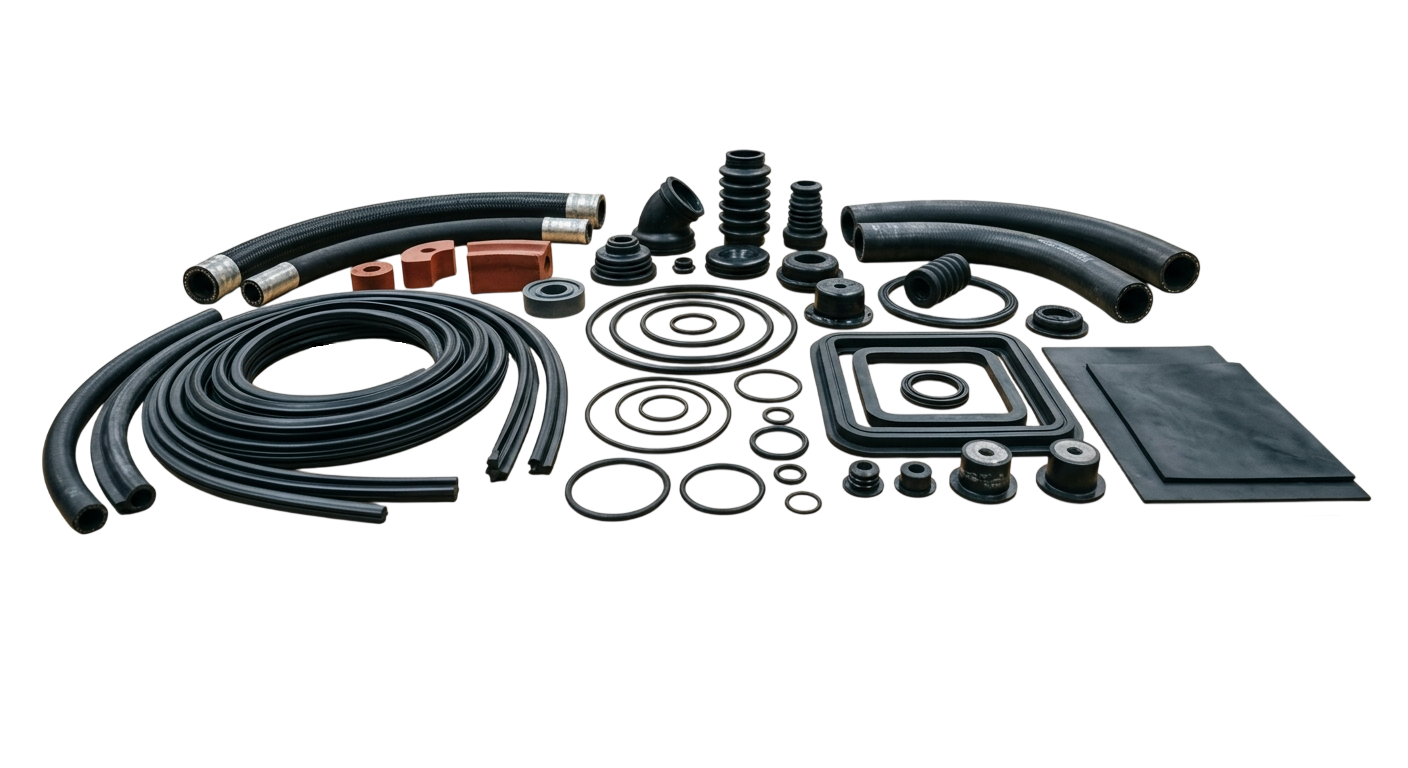
- Can be molded into parts, extruded into profiles or tubing, or calendered into sheet goods.
Limitations
- Chemical Incompatibility: Not recommended for applications involving petroleum derivatives; generally attacked by mineral oils, solvents, and aromatic hydrocarbons.
- Physical Strength: Slightly lower in resilience and tensile strength compared to natural rubber and polyisoprene.
- Electrical Conductivity Risks: Tends to become conductive when mixed with carbon black (common in most black-colored compounds).
- Insulation Restriction: Not recommended for use as an electrical insulator.